









Susan Nash, Ph.D., Director of Innovation & Emerging Science, leads the AAPG education and dialogue around how subsurface expertise can underpin future power generation at its recent Subsurface Energy to Power Workshop in Houston, Texas. She invited I2M’s President & CEO of the I2M Corporation, Michael D. Campbell, P.G., P.H., C.P.G. to discuss what I2M is doing these days. And they are heavily committed to projects involving uranium to provide the fuel to power SMRs. He has concluded that nuclear power is scalable and that SMR-driven microgrids will be widepread in the U.S. in the years ahead.
As global power and electricity needs skyrocket due to electrification, data center growth, and the adoption of AI-driven technology, scientists are working rapidly to expand grids and meet projected demand.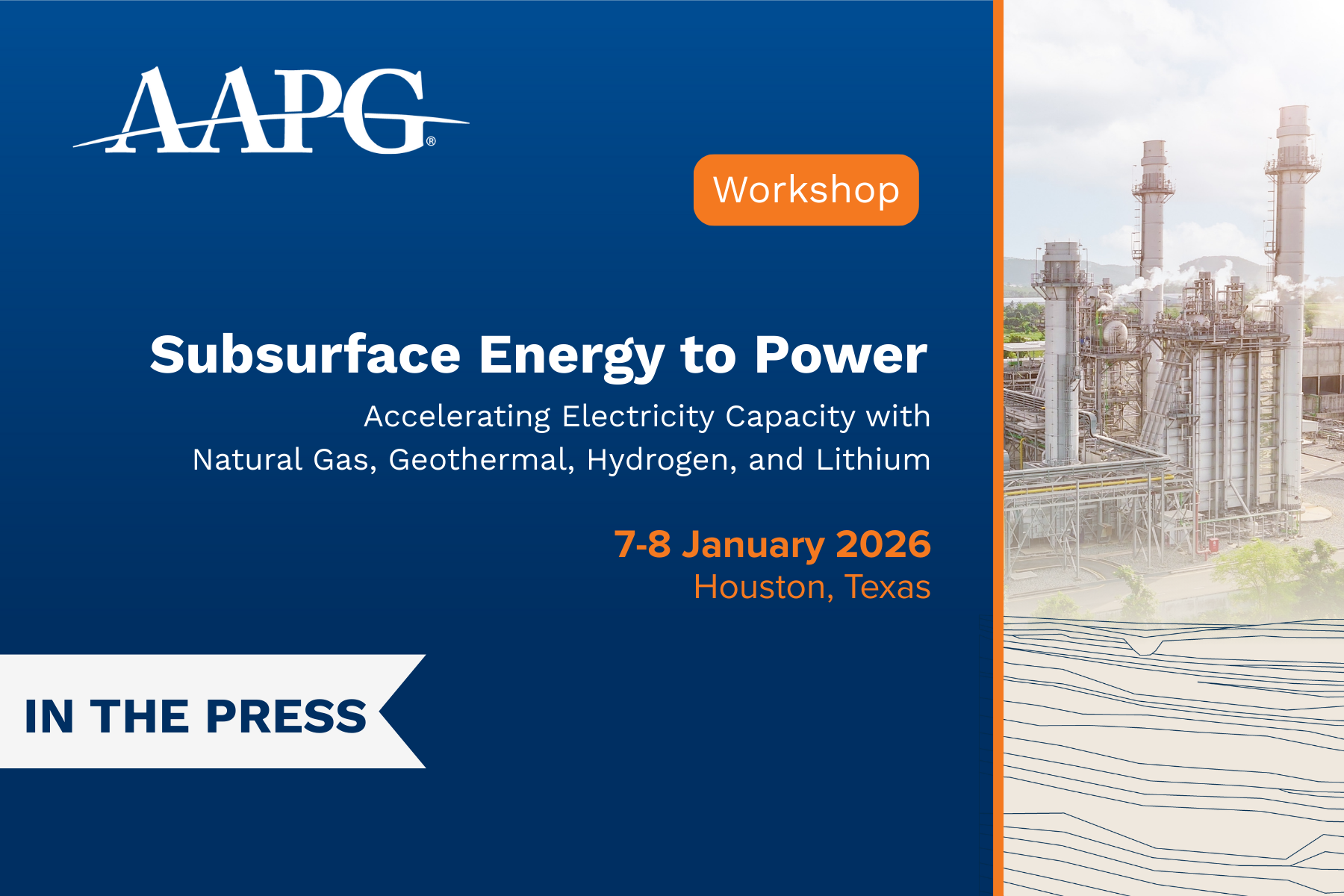
BP suggests global electricity consumption could rise more than 40 percent by 2035 and double by 2050. Data center demand alone could nearly double by 2030, according to S&P Global.
To help drive solutions, AAPG recently hosted the Subsurface Energy to Power Workshop in Houston, Texas. The two-day workshop was designed to lead education and dialogue around how subsurface expertise can underpin future power and electricity growth, uniting geoscientists, drilling and subsurface engineers, technologists, operators, and energy industry CEOs in insightful, cross-disciplined discussion.
Uniting Leaders from Every Geoscience Arena
The program brought together experts from nearly every geoscience application, including uranium, geothermal, hydrogen, natural gas, lithium, and more, to explore how the energy industry can ensure secure and reliable power at scale.
“As electricity and power demand grow at an unprecedented pace, the role of geoscience has never been more critical,” said AAPG Executive Director Tom Wilker. “AAPG serves as a leading voice for geoscience, ensuring that subsurface science informs the solutions needed to deliver secure, reliable energy worldwide.”
Future development and infrastructure needs for energy and power will require a cross-disciplinary approach. Workshop speakers included leaders from oil field services, academia, government, major oil, geoscience, banking and finance, uranium/nuclear power, geothermal and renewable energy, energy data and analytics firms, and more. Companies represented included: Amazon Web Services, Equinor, Enverus, Federal Reserve Bank of Dallas, GeoPrime Energy, Geothermal Gradient, the I2M Corporation, Renewable Energy Institute, Rystad Energy, SLB, University of Alabama, The University of Texas at Austin, and Woodside.
Fostering Cutting-Edge Thought Leadership
Discussions and panels spanned the lifecycle of electrical grid expansion or generation projects, incorporating technical geoscience at every turn. Resources like geothermal, natural gas, uraniun, hydrogen, lithium, and emerging power pathways all depend on subsurface understanding.
“This workshop focused on the applied geoscience that underpins technologies such as geothermal energy, subsurface energy storage, lithium, and uranium. Just as importantly, it provided an educational forum to share best practices, case studies, and emerging research, helping equip geoscientists and engineers with the skills needed to support power systems,” says Susan Nash, director of education, research, and innovation at AAPG.
Workshop themes included:
- Rapid conversion to electricity for natural gas, geothermal, hydrogen, and lithium energy,
- Project types and development,
- Resource characterization and mapping for natural gas, geothermal, lithium, hydrogen, uranium,
- Business and financing of energy projects,
- Technology integration for geothermal, hydrogen generation, and conversion of oil and gas wells,
- Land, legal, permits, tax credits, and other considerations,
- Data centers and community-scale solutions and deployment strategies, and
- AI, environment, and water management.
The most widepreadship discussions were on how AI can and will be used as a means of environmental protection in the future.
Having an energy-inclusive solution with a deep regard for water (both surface water and groundwater) and the environment is a unique approach that AAPG is well-positioned to provide. Technical highlights from the workshop included a presentation from Kirsten Marcia, president and CEO of DEEP Earth Energy Production, which featured a hybrid geothermal and natural gas solution to generate energy in Saskatchewan; a presentation by Michael D. Campbell, P.G., P.H., C.P.G., president and CEO of the I2M Corporation, discussed small modular nuclear reactors (SMRs), for which uranium in Texas will be key (here); Susan Nash commented on Mr. Campbell’s presentation:
“I wanted to send you a quick note to say thank you for the fantastic presentation you delivered at the 2026 Subsurface Energy to Power Workshop in Houston last month. The insights and remarks you delivered were so valuable, and I thought to myself, what a shame it’d be if your presentation wasn’t shared beyond this 2-day workshop!”
To ensure that, here is a link to the slides from his 17-minute presentation. Note: An expanded version of this presentation will be presented for the March AIPG-TX webinar.
AAPG’s efforts to forge and lead credible, technically grounded conversations and education at the intersection of subsurface and power are underpinned by support from some of the most influential companies in the energy sector.
Thank you to the event sponsors: GSI Environmental, Halliburton, AAPG Foundation, AAPG Divisions, AIPG-TX, Altair, Barrell Energy, the I2M Corporation, Petrabytes, and Rock Flow Dynamics.
AAPG plans to host similar cross-disciplinary workshops to guide industry thought leadership and solve global challenges, including Opportunities with Legacy Assets: AAPG’s Fourth Annual Orphan, Abandoned, Idle, and Marginal Wells Conference in February, and its AI and Machine Learning in Subsurface Workshop scheduled for summer 2026.